Queer Love Deserves Magic Too
The power of fantasy in queer fiction

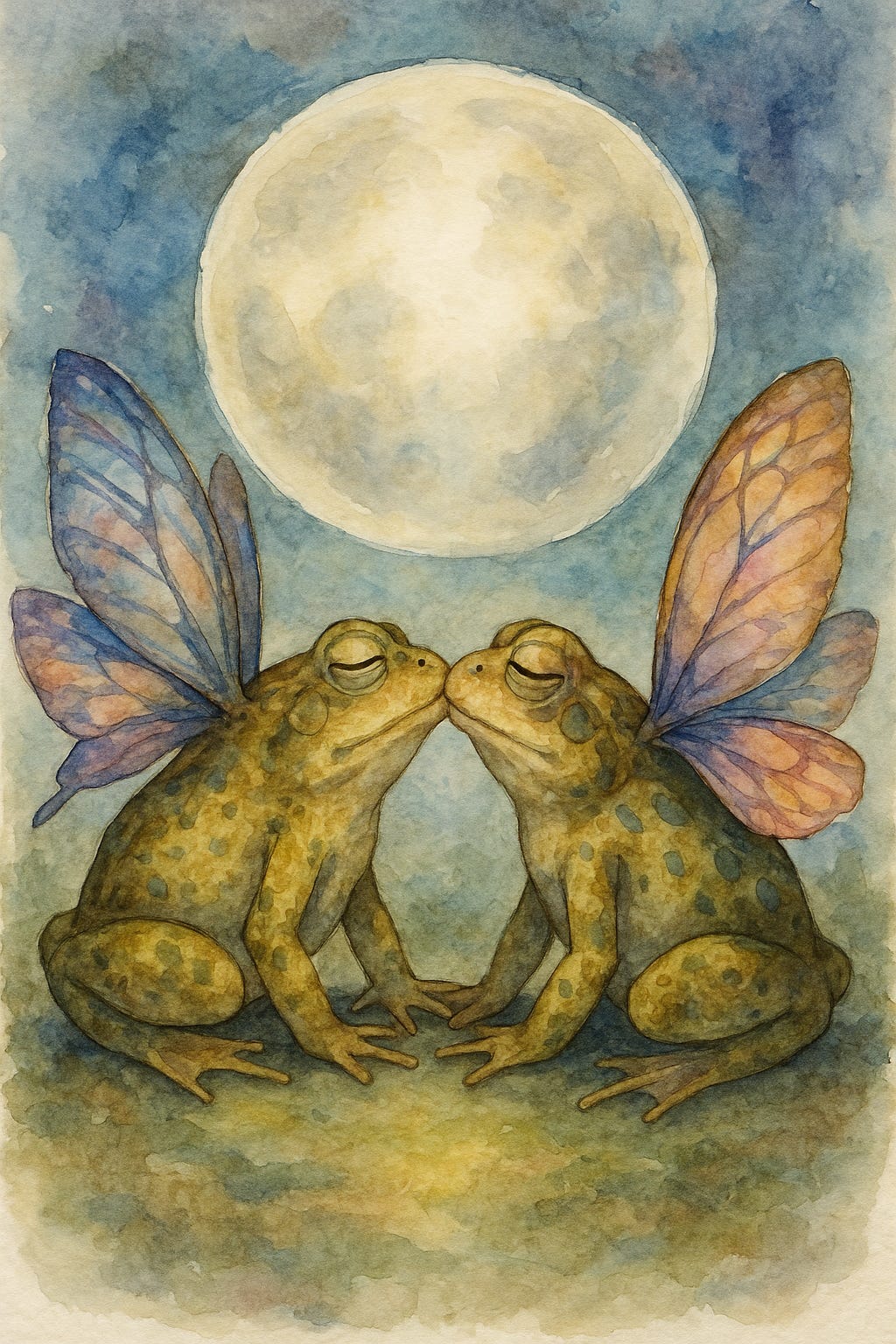
When I was growing up, I devoured fantasy books like they were spells that might unlock the world. I wanted hidden doorways and talking forests. I wanted chosen ones and crowns and mysterious strangers who spoke in riddles. Most of all, I wanted magic.
But somewhere deep in the story—tucked between the sword fights and secret prophecies—I also wanted to see me. Or someone a little like me. Someone who loved a little differently. Someone whose heart didn’t always follow the “boy meets girl” blueprint.
For the longest time, queer love in fantasy either wasn’t there at all—or it ended in tragedy. The gay characters were killed off, the sapphic stories were whispered, and the happy endings were reserved for the straight ones.
But fantasy, to me, is about possibility. It’s the one place where the rules of the real world don’t have to apply. Where a kitchen broom can take you flying, a name can bind a demon, and a quiet girl from nowhere can hold the fate of a kingdom in her hands.
It’s where we go when we want to believe that anything is still possible. That even the lost can be found. That even the broken can become something beautiful.
So why shouldn’t those worlds have queer joy too?
Why shouldn’t the girl kiss the witch and still save the kingdom—maybe with lavender tucked behind her ear and mud on her boots? Why shouldn’t the prince fall for the boy with wings, and fly off into the stars with his heart beating like a war drum? Why shouldn’t the knight take off her armour and fall asleep in the lap of her swordsmith wife? Why shouldn’t two mischievous boys steal spells from a crooked market and fall in love along the way?
Queer love deserves dragons too.
It deserves quests—not just for survival, but for truth and tenderness. It deserves enchanted forests and slow-burn magic and the kind of epic love that changes the fate of entire worlds.
It deserves to be grand and golden. It deserves softness and silliness and safety. Candlelit dinners in treehouses. Flushed cheeks after magical duels. Letters written in secret and slipped under the door. Love spells gone a little bit wrong.
It deserves to take up space—not just as a subplot or a footnote or a blink-and-you-miss-it moment—but as the heart of the story. As the thing the story was always leading to. As something brave and blazing and utterly, gloriously true.
That’s exactly what I’m trying to hold space for in Moonmilk and Wildflowers—the book I’m writing now. It’s a fantasy story full of strange creatures, soft revolutions, and a love that grows quietly between two girls who weren’t supposed to find each other. It’s tender and a little odd and threaded through with longing, and yes—there are spells, and secrets, and one very stubborn wildflower witch.
This story bloomed from the part of me that never saw love like mine in the books I read as a teenager. The part that wanted someone to say: You’re allowed. You belong. You are not too much.
I think we all deserve stories that let us feel that way.
When we include queer love in fantasy, we send out a little signal to every reader who’s ever felt a bit out of place. We say: you are not alone. You’re allowed to want wild adventures and to be loved exactly as you are. You can be the hero, the dreamer, the brave one, the beloved.
So let’s keep writing those stories. Let’s fill the castles and constellations with every kind of love. Let’s imagine better, wilder, softer worlds.
Because fantasy is for everyone.
With stardust and scribbles,
Ellowen